
Travel note · Food
Surinamese food to try in Paramaribo.
Roti, pom, saoto, telo — what to order, and where to find it near the old city.
The Surinamese food to try first is roti, pom, saoto, and telo — plus the street snacks and the Central Market on a busy morning. Suriname eats the way it looks: Indigenous, Creole, Hindustani, Javanese, Chinese, and Dutch influences on the same street, often on the same plate. Come hungry, and wander.
Order this first: roti, pom, saoto soup, and telo. Then follow the smell of the street snacks, and give a morning to the Central Market. The front desk is happy to point you to the good stuff nearby.
The dishes to order
A few plates say Suriname in a single bite. Roti — soft flatbread with curried chicken, potato, and long beans — is the everyday favourite, and no two cooks make it quite alike. Pom, a baked dish of grated pomtajer root and citrusy chicken, is the one that turns up at every celebration. Saoto, a fragrant Javanese chicken soup crowned with crisp toppings, is comfort in a bowl. And telo — fried cassava with salted fish — is the simple, moreish one you’ll want again.
Keep going and you’ll meet moksi alesi (a loaded one-pot rice), bara (little fried lentil rings), and more fresh tropical fruit than you can put a name to.
Street snacks and the market
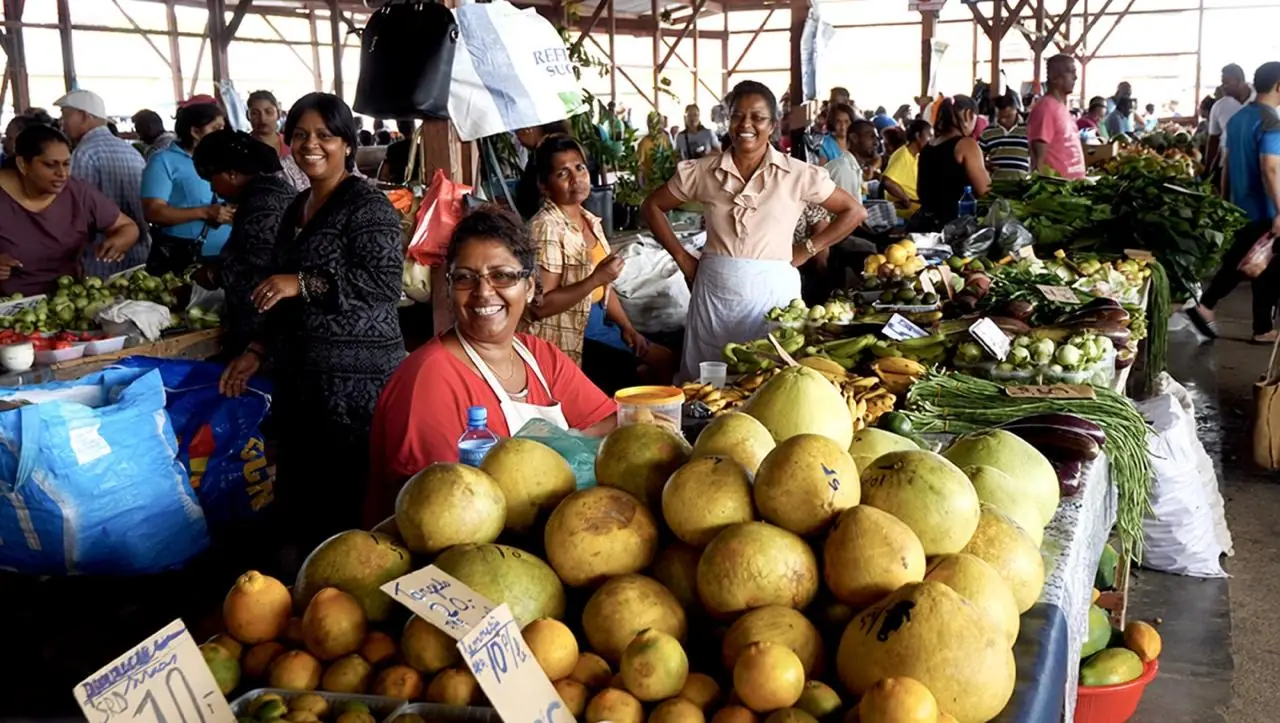
Some of the best eating here isn’t sit-down at all. Warungs — small Javanese food stalls — do quick, honest plates for very little. Morning is the time for the Central Market: produce, spices, dried fish, and snacks, and the ordinary rhythm of the city all in one noisy, colourful place. Go early, graze as you walk, and don’t over-plan it.
Drinks, and something sweet
Save room. Fried plantain, coconut sweets, and little Javanese treats turn up at every corner, and the fruit alone — mango, soursop, star apple, watermelon by the slab — is worth a detour. To drink, look for fresh juices and dawet, a sweet, milky iced drink, alongside the local Parbo beer if the afternoon calls for it. Coffee and tea are everywhere, and a mid-morning stop for either is a fine excuse to sit and watch the street go by.
Breakfast, for what it’s worth, is its own small pleasure: eggs cooked to order, a Surinamese omelette, pancakes, fresh fruit — something a little different most mornings. It’s the part of the day guests tend to write to us about: a quiet, generous start before the heat sets in.
Do the market at opening
If you do one food thing, make it the Central Market early. It’s loud, close, and gloriously unpolished — pyramids of fruit, sacks of spice, dried fish and fresh herbs, and vendors who’ll happily tell you what to do with any of it. Go before the heat, buy something to eat as you walk, and let the crowd carry you along. It’s the whole culture in one morning, and it costs almost nothing.
Where to eat, near the centre
The happy accident of staying in the historic centre is that the food comes to you. Around Heerenstraat and the streets nearby, you’re within a short walk of roti shops, warungs, cafes, and proper restaurants — enough range for a week without repeating yourself. Rather than send you to one address that may have changed, we’ll steer you to what’s good right now, close to hand, and suited to the evening you’re after. A quiet word at the desk usually beats a list.
It’s one more reason the centre earns its keep — more on that in where to stay, and on walking it in getting around Paramaribo.
However you go about it, don’t rush the eating. A long, slow lunch in the heat of the day is not a waste of time here; it’s rather the whole idea. Order one more thing than you meant to, sit a while longer than you planned, and let the afternoon wait.
Make it a trip. Pair this with the Surinamese food & market morning — we’ll arrange it from the front desk.
More travel notes