Travel note · Suriname
Getting to Suriname.
Flights, the airport, visas, and roughly what it all costs — the practical version.
You get to Suriname by flying into Johan Adolf Pengel International Airport (PBM), just outside Paramaribo — most long-haul travellers connect through Amsterdam, and from within the region through the Caribbean, Guyana, or Brazil. Getting here takes a little planning; being here takes almost none.
The essentials: fly into Johan Adolf Pengel (airport code PBM), arrange your e-visa or tourist card online before you go, and allow about forty-five minutes from the airport into the historic centre.
What follows is the short, practical version — enough to book with confidence, without drowning in the fine print.
Flights and routes
The main long-haul route runs from Amsterdam, flown several times a week; for many visitors that’s the natural gateway, and it’s worth booking early in the dry season when seats fill. From within the region, there are connections to and from the Caribbean, Guyana, and Brazil, which makes Suriname an easy addition to a wider South American or island trip.
Wherever you begin, you’ll land at Johan Adolf Pengel International Airport, known locally as Zanderij. Fares rise and fall with the season, so if your dates are fixed, book ahead; if they’re flexible, the quieter shoulder weeks tend to be kinder on price. There’s more on timing in when to visit Suriname.
Do I need a visa for Suriname?
Most visitors need either an e-visa or a tourist card to enter, arranged online before you travel. Which one applies to you, and what it costs, depends on your nationality — and the rules do change. This is the one detail worth confirming on the official Suriname immigration portal rather than taking any blog’s word for it, ours included.
Apply a couple of weeks ahead. It’s a straightforward form, but not something to leave for the airport queue. Have your onward or return ticket and your accommodation details to hand, and keep a copy of the approval with your passport. That’s usually the whole of it.
Before you fly
A short list saves a lot of fuss at the other end. Check that your passport has at least six months’ validity beyond your dates, arrange travel insurance that covers the interior if you’re heading into the forest, and bring any regular medication with you, since specific brands can be hard to find here. If you’re arriving from certain countries, a yellow-fever certificate may be requested — one more thing the official portal will confirm.
Pack for the climate while you’re at it. It’s hot and humid year-round, so light cotton and linen earn their place, with something for a sudden shower and sturdy shoes if the rainforest is on your list. Travel a little lighter than feels natural; you’ll be glad of it in the heat, and anything you forget, the front desk can usually point you to within a short walk.
The airport, and getting into town
Zanderij is about forty-five minutes from Paramaribo by road, a little longer if you land in the middle of the day. Taxis wait outside the terminal, and many places to stay will arrange a transfer if you ask in advance. If you’re staying with us, the front desk can have a driver meet you at arrivals — which takes the guesswork out of a late-night landing after a long flight.
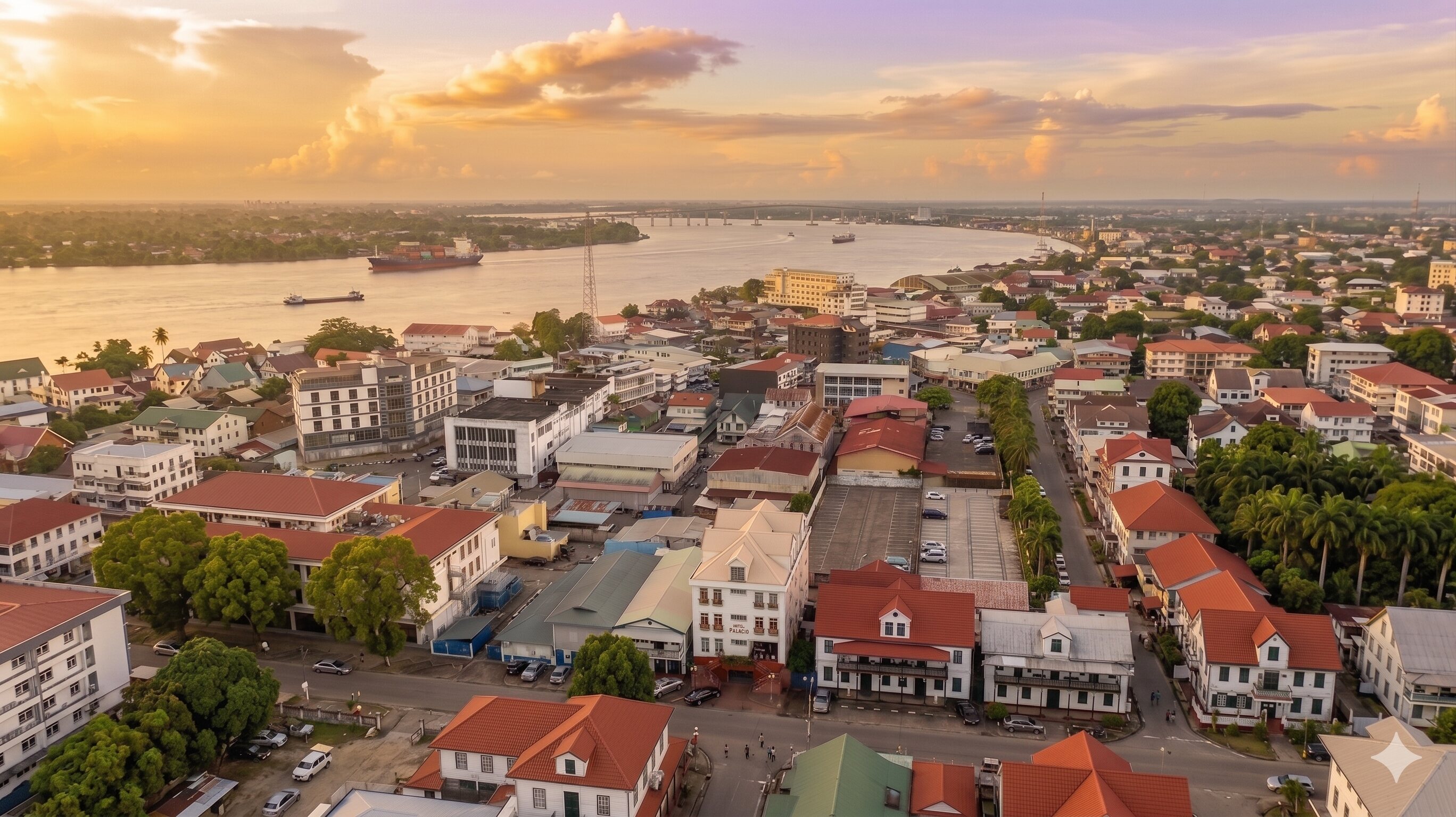
Once you reach the historic centre, the car more or less disappears. The old town is small and flat, and getting around Paramaribo turns out to be the easiest part of the trip.
How much does a trip to Suriname cost?
Suriname is affordable by regional standards, and that is part of the appeal. Flights are usually the biggest single cost; once you are here, daily spending is gentle. A simple local meal often runs only modest local prices, a taxi across town a little more, and a boutique room like ours starts around 60 US dollars a night, breakfast included. Guided trips into the interior cost more, since they cover transport and a driver-guide, and an overnight adds a little again. The local currency is the Surinamese dollar (SRD); cards work in hotels and larger places, but keep some cash for markets, taxis, and smaller vendors — there is a bank with an ATM right next door to us.
Sort the flight and the visa, and the rest settles into place at the desk. When you’re ready, we’ll help with the landing — and with a quiet room to arrive to.
Make it a trip. Pair this with the Historic Paramaribo walk — we’ll arrange it from the front desk.